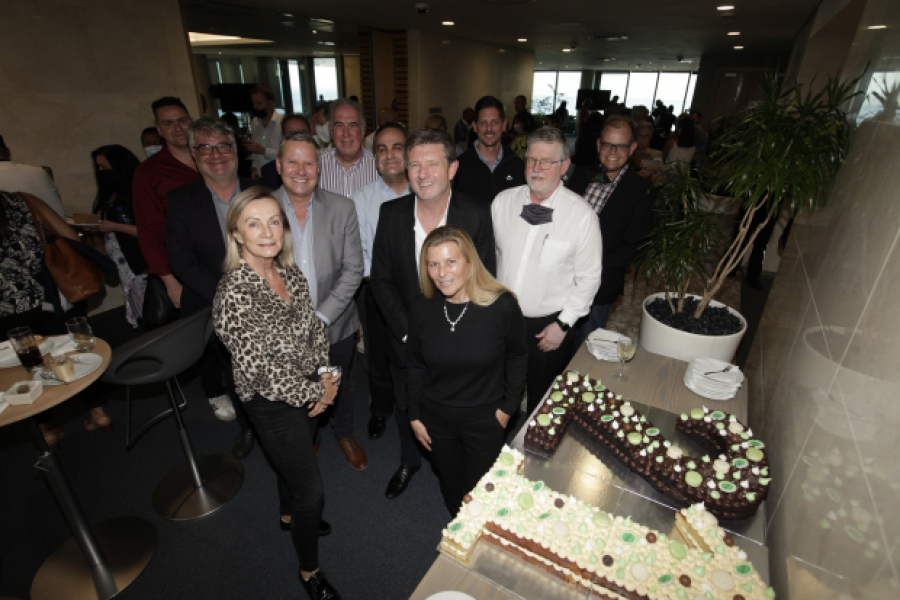
The CCID comes of age this year. Its remarkable journey in town is revealed here through the eyes of some of the Capetonians who have worked closely with the organisation to ensure its success.
ANDREW BORAINE
Chief Executive, WC Economic Development Partnership; former Cape Town Partnership CEO
When we started the CCID in 2000, we had a model which focused on urban management followed by security. The aim was to get the basics right and to do the fundamentals well. The second phase was communicating what we were doing, and the third phase was attracting investors. Being able to implement this model meticulously has been at the heart of the CCID’s success. My own journey with the CCID started many years ago with a minor car accident in the CBD due to a traffic sign facing in the wrong direction. The responsible department at the City was contacted but we were told it would take four weeks to correct the sign. The CCID managers then did it themselves – and that’s a great example of the difference the CCID makes in town every single day!
MICHAEL FLAX
Executive Deputy Chairman, Spear Reit Ltd, and former CCID chairperson (2003–2006)
The CCID’s 21-year journey has been a success story for all to see. In its early days, the CCID required massive input from its non-executive directors. These were all titans of the Cape Town property industry who had seen their property values tumble as the CBD went into decline. During this era, the dream of a permanent Central City population was realised. This came about through a multitude of residential conversions of older office blocks into swish, new inner-city pads. It was only due to the reduction in “crime and grime” that people wanted to live in town again. The popularity of Cape Town as an international city has grown in tandem with the CCID’s success.
MICHAEL FARR
Former CEO of the Cape Town Partnership and CCID (1999 - 2003)
The Cape Town Partnership (CTP)/CCID started in a single rented office with a single desk and chair. We had funds to last six months! Our priority was to negotiate a Service Level Agreement (SLA) with the City of Cape Town while approaching CBD property owners for seed funding. After a year, an SLA was signed. It was historic as it launched the country’s first successful City Improvement District (CID). Managed by the CTP, the CCID was designed to deliver a safe and clean urban environment – the basis on which to position Cape Town among other premier global cities. By end 2000, projects valued at R2.4 billion were under construction, with a further R3.2 billion planned. By 2003, new investments worth over R8 billion were implemented. The CBD has made great progress over the last two decades. Investment inflows have been consistent and urban decay is minimal. The role the CCID has played in catalysing change has been enormous. The Central City would not be what it is today had it not been for the CCID.
RICHARD HARRIS
Woodheads CEO and former CCID board member (2003 - 2018)
The CCID is an indispensable part of the social fabric in this city and CBD. People don’t properly understand its impact and efforts unless they have been actively involved within the organisation as I was for 15 years. Every year throws a new challenge at the city, and the CCID has this ability to adapt and make things happen, from reducing crime and improving public spaces to social development and marketing the city internationally. Highlights are the 2010 FIFA World Cup and the World Design Capital Cape Town 2014, which showcased how successful the CCID was in improving the CBD and its image in collaboration with other organisations and the City. Since then, the CCID has continued to be at the forefront of showing how a CID is supposed to perform, from the best transparent administration to active participation on the streets.
MARTIN RIPPON
Former CCID board member (2000 - 2018)
It was a privilege and honour to serve on the CCID Board during my tenure. I have glowing memories of the trials and tribulations we faced as a committed band of people intent on tackling some of the Central City’s key challenges. The CCID Board has never deviated from focusing on a clean, safe, caring and inclusive city. While there are various ongoing challenges, as well as those presented by the current Covid-19 pandemic, I have no doubt that the CCID Board will continue to lead with passion and commitment and the team will continue to deliver service of the highest level.
TAMRA CAPSTICK-DALE
Corporate Image CEO and CCID board member (2011 to today)
The formation of the CCID resembles one of those seminal moments. Back in the late 1990s, Cape Town was descending into organised chaos … and there was no sign it would improve. With the formation of the Cape Town Partnership in 1999, an approach was adopted to promote and protect the CBD. The understanding was that a CID might be the perfect delivery vehicle to rejuvenate the CBD, as it had in other global cities. The Partnership looked at New York and Coventry, took the best of both, and by working closely with the City to enable new CCID legislation, we put a plan in place. When the CCID was finally approved, we didn’t appreciate that history was being made. We can see that now. That the CCID has been successful in its two primary objectives – cleansing and security – is obvious. But the impact has been both practical and psychological. The practical impact was to turn the investment tide. This was delivered quickly, and some of today’s best-known developments arose during this period. Investment continues unabated. But the psychological impact is best understood by Capetonians themselves. The place they call “town” had become the subject of disappointment and derision. What the CCID returned to the city – and this will be its abiding gift to Capetonians – is a sense of pride.