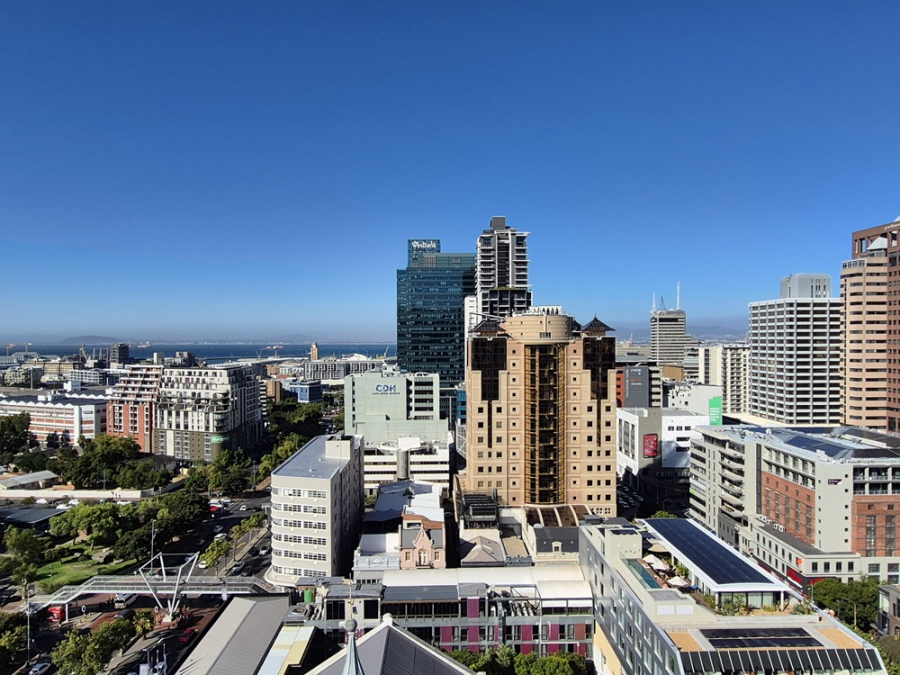
The outlook for commercial property in Cape Town’s CBD looks bright, according to the recently launched State of Cape Town Central City Report 2025 – A Year in Review.
Even though residential developments dominated the record R12.8 billion investment across 29 property developments in the 2025/26 CBD pipeline, the number of commercial builds doubled compared with the previous year.
At least six developments, 21 % of the all the builds in the pipeline, are purely commercial with an investment value of R2.38 billion, with additional office space included in mixed-use projects.
Rob Kane, CCID Board chairperson and CEO of Boxwood Property Fund, says there the commercial property sector is being shaped by strong demand for quality office space, limited new supply and continued investment in downtown Cape Town.
“These trends, together with the upgrading and repositioning of existing buildings, are creating further opportunities for the commercial sector and strengthening the CBD’s position as a business and investment destination,” says Kane.

CAPE TOWN METRO’S COMMERCIAL OFFERING PERFORMS
The city of Cape Town continues to record the country’s lowest office vacancy rates, according to the SA Property Owners Association (SAPOA), outperforming South Africa’s other major metros.
The city recorded a vacancy rate of 6.1 % in Q4 2025, compared with 15.8 % in Johannesburg and 12.1 % in Durban. By the end of Q2 2026, Cape Town’s metro vacancy rate had increased marginally to 6.2 %.
Within the CBD, SAPOA recorded an office vacancy rate of 10 % at the end of 2025, well below the national rate of 12.8 %. The CBD had the second-lowest office vacancy rate among South Africa’s major CBDs, although this edged up to 11.9 % at the end of Q2 2026.
As reported in the State of Cape Town Central City Report 2025 – A year in review, published by the CCID, at the close of 2025, the CBD had 1 058,085 m² of office space, marginally up on the previous two years. This amounts to 39 % of the total office space in the city of Cape Town.
DEMAND FOR QUALITY OFFICE ACCOMODATION
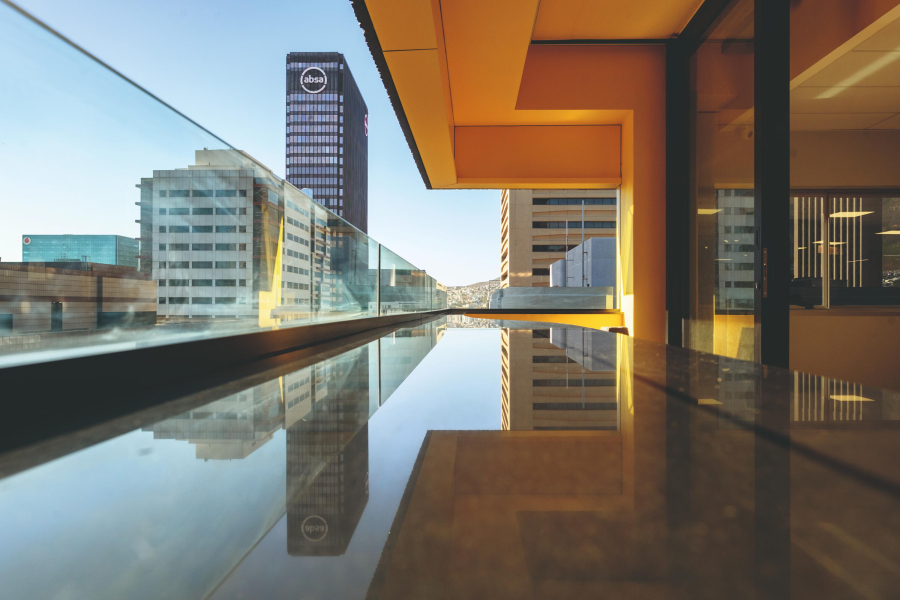
Against this backdrop of relatively low vacancies and limited new office supply, Kane says demand is strongest for quality office accommodation. He describes the market as increasingly “dumbbell-shaped”, with relatively few vacancies at the top and bottom ends of the quality spectrum, while B-grade buildings are experiencing greater pressure.
“There is limited availability of both P-grade and C-grade space. The shortage of C-grade space is partly a result of older buildings being acquired and redeveloped or upgraded for residential, apartment or hotel use, while some B-grade properties have not been modernised and have consequently struggled to remain competitive.”

PARKING IS A PRIORITY
This is contributing to demand for high-quality office accommodation with sufficient parking, particularly from larger corporates seeking a city-centre location.
“Driving and parking is a South African reality, even as Cape Town moves towards a more walkable CBD,” says Kane, arguing that restrictions on parking in Johannesburg contributed to the decline of its CBD.
This is one of the primary reasons that Kane’s Boxwood is behind one of the largest commercial builds in the CBD in years, namely the R1.7 billion The Matrix. In the planning phase, the striking skyscraper will add 2 000 m² of P-grade office space and 570 parking bays to the Central City.
Set to dominate Strand Street where it intersects with Bree Street, The Matrix will also have a retail component and is scheduled for completion in 2029. “Existing properties do not always have the capacity or parking ratios required to accommodate larger tenants.”
Commercial and mixed-use buildings, valued collectively at R6 162 billion and in various stages of development, are set to set to increase the CBD’s office space offering.
Two were completed last year: the renovation of Ninety One (R600 m, Growthpoint Properties) – signalling the investment giant’s faith in the inner city – and a heritage renovation in Bree St, namely 93 Bree Workspace (R32 m, Neighbourgood). Three other commercial developments are under construction. They include two more heritage renovations by Neighbourgood, 88 Loop St and 67 Buitengracht St (both R25 m).
Two of the four mixed-use developments in the property pipeline listed in the SCCR 25, collectively worth R1.48 billion, will also add office and other commercial space. Among these is City Park, the R1.3 billion renovation of the old Christiaan Barnard Hospital by Ingenuity Property Investments and Kasada Capital Management. Due to come on stream in Q3 2026, the development will add 10 500 m² of P-grade office space to the heart of the CBD while contributing significantly to its day- and night-time economy.
Kane says there is a multiplier effect of major developments and investment in the CBD. “As prominent buildings are upgraded or new developments take shape, they create greater confidence in the area. If you upgrade your building, others want to do the same.”
THE RISE OF SOFTER STREETSCAPES
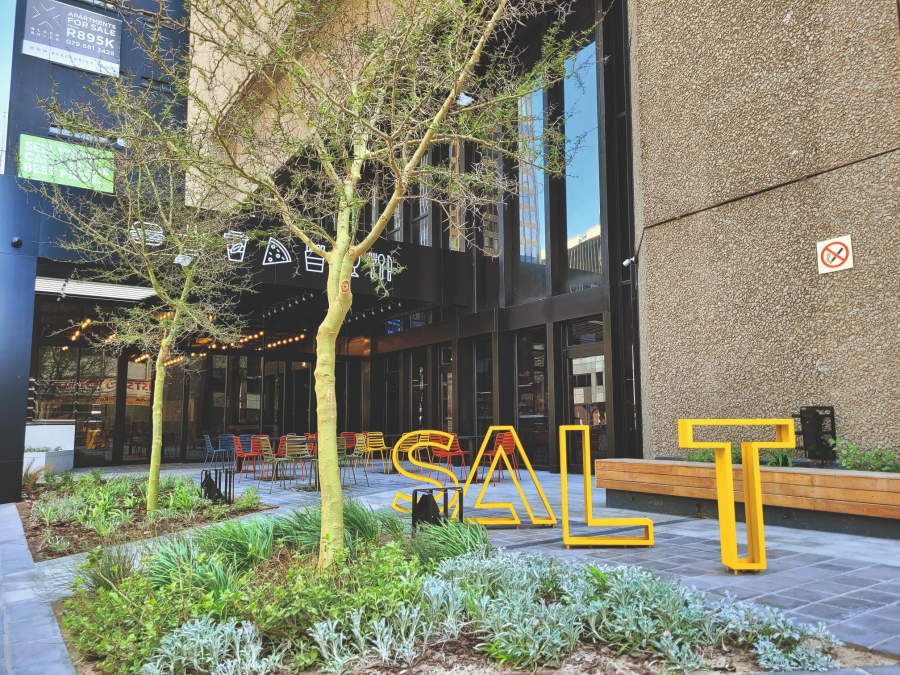
As commercial development takes speed, Kane emphasises the importance of developers considering the total experience of a building and its relationship with the surrounding streetscape, rather than having large commercial buildings create barriers at street level, particularly as Cape Town moves towards a more walkable 15-minute city.
“Improving the streetscape is a focus at Boxwood, with investment directed towards creating a more pedestrian-friendly environment,” says Kane. At The Matrix, this includes an application to remove parking directly in front of the building, creating more space for pedestrians and allowing restaurants and other businesses to spill onto the pavement.”
He adds that with each new development, the CBD can offer more to its residents, tenants and investors as it reshapes the urban experience into an ideal environment to work, live and play.
“This is the kind of city the CCID has worked tirelessly to build,” concludes Kane.
Find the full report (click here)
Read about Commercial property trends (click here)
Other stories you might like:
Cape Town’s Green CBD Powers Stronger Investment Confidence
Cape Town CBD trends shaping the property sector