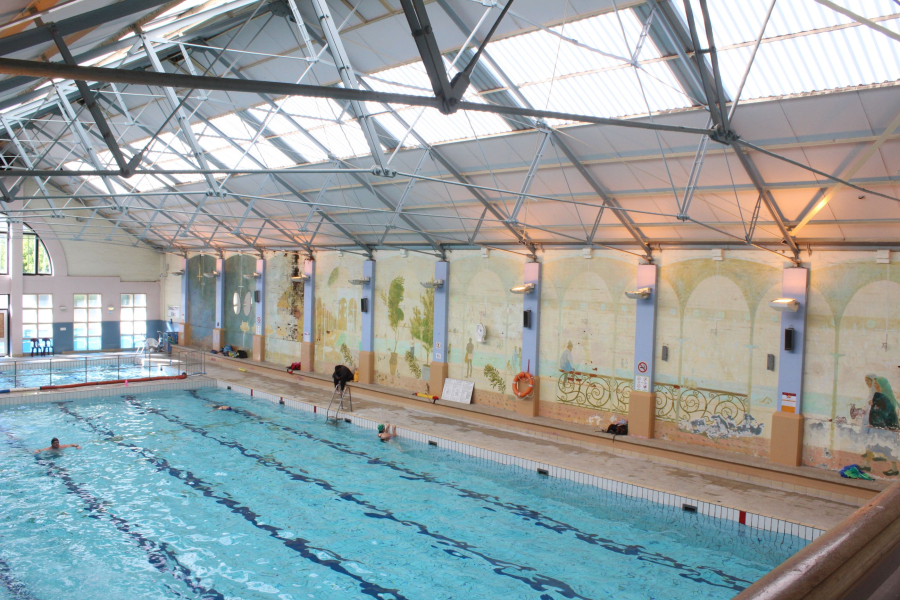
An inner-city sanctuary, the graceful, entrancing Long Street Baths is part of the fabric of the city. Recently spruced up, this Central City icon’s splendour is more sparkling than ever before.
There was talk once — serious talk — of demolishing the Long Street Baths. It was the Sixties. Increased traffic was putting pressure on the nexus where the mountain end of Long Street connects with Buitensingel, Orange and Kloof streets, and plans were afoot to ease congestion. Besides, the pools were 60 years old, and they had deteriorated enough to justify closing forever the wooden doors under the arches, above which the words “Baths” and “Baddens” (in Afrikaans) were moulded in Art Nouveau lettering.
Build a new indoor pool in Oranjezicht, the argument went. “The Oranjezicht project will replace the old Long Street bath which is to be demolished to make way for the Mill Street ring road linking De Waal Drive with Buitengracht,” The Argus of 24 April 1970 reports. “A start will be made on the Oranjezicht bath later this year.”
But later that year came and went, and the baths remained in place. Now, more than 50 years on, the baths are still there. Still used. Still loved.

A TENACIOUS SURVIVOR
They recently reopened after more than a year of being closed. Roof sheets had been ripped off during one of Cape Town’s epic wind spells, and the City of Cape Town used the unexpected hiatus in normal public activity during lockdown to do wide-ranging repairs.
A total of R1.1 million was spent on replacing the rusted steel piping from the plant room to the filters, repairing and servicing steel filter tanks, repairing heating units and their pumps, the damaged roof and on doing an electric assessment among other things. “[The fixes] required specialist knowledge and skills,’ says Zahid Badroodien, former City of Cape Town mayoral committee member for Community Services and Health, who now holds the Water and Waste portfolio. “Long Street is one of the few pools that operates all year and [it] is well used by recreational and professional bathers, swimming clubs and various schools, and activities and programmes such as underwater hockey and water aerobics take place. We are pleased that these activities can now resume with the observation of Covid regulations.”
The fixes did not extend to the aesthetics. The enormous mural painted on the wall closest to Table Mountain is faded and in some places the brickwork is peeking through. The stalls in the changing rooms look a little worse for wear and some of the locker doors are hanging off their hinges. But the floors and toilets are sparklingly clean. A mop in the women’s change rooms is often taken up by women who’ve trailed water in from the pool, contributing to a feeling that this shared space, no matter how shabby, is deserving of its users’ care.
An air of quiet order and respectful community is possibly one of the 113-year-old space’s greatest pulling power.
A SAFE SPACE
Cape Town photographer, writer and filmmaker Yazeed Kamaldien, an avid recreational swimmer, has only good memories of the Long Street Baths.
He used to work as a journalist in St Georges Mall and would sometimes pop in after work for a swim. “I would sometimes ask someone, usually an aunty with her children, to watch my bag, as I usually had my phone with me. I always feel a sense of community, of belonging, when going to public swimming pools, especially the Long Street Bath, as the families that I would see there were from Bo Kaap. I know people who live in Bo Kaap, so it is like seeing people I know, even though I might not actually know their names. It always felt like a safe family space.”
For the first 80 years of the pool’s life, however, neither the people who lived in the Bo Kaap, nor any Capetonians who were not white, were able to use it. Instead, white people who lived in the flats nearby often wondered over in their slippers for a swim and a shower, so that for years the baths were known as “the slipper baths”.
In the 1970s, the city managed 12 segregated pools. There are now 35 pools in Cape Town, from Khayelitsha to Sea Point, and from Muizenburg to Parow.
NOT A POOL FOR POSERS
Cape Town underwater photographer Helen Walne says the Long Street Baths are a sanctuary in the city. “It’s something to do with the hushed acoustics, the way light floods in through the windows at the far end, and the soft colours of the fading murals. Everything is muted and gentle and spacious.”
On a recent Tuesday morning six women — two in swimming hijabs, three in Speedos, one in a bikini — swam lengths in water of pleasant 26 deg Celsius. Two female lifeguards looked on from the stands. Some years ago, the women of the Bo Kaap wrested this one day of the week as a women-only swim day.
Walne says this is not a pool for show-offs or champions or posers or pouters. “It’s for bobbing kids and elderly backstrokers, for new-love teens and Saturday families. And it’s one of the few spaces in the city where women can feel completely safe and free, with the pool open to women only between 10h00 and 14h00 on a Tuesday. We owe a lot to those who campaigned for this. It’s a rare taste of what normality should be.”
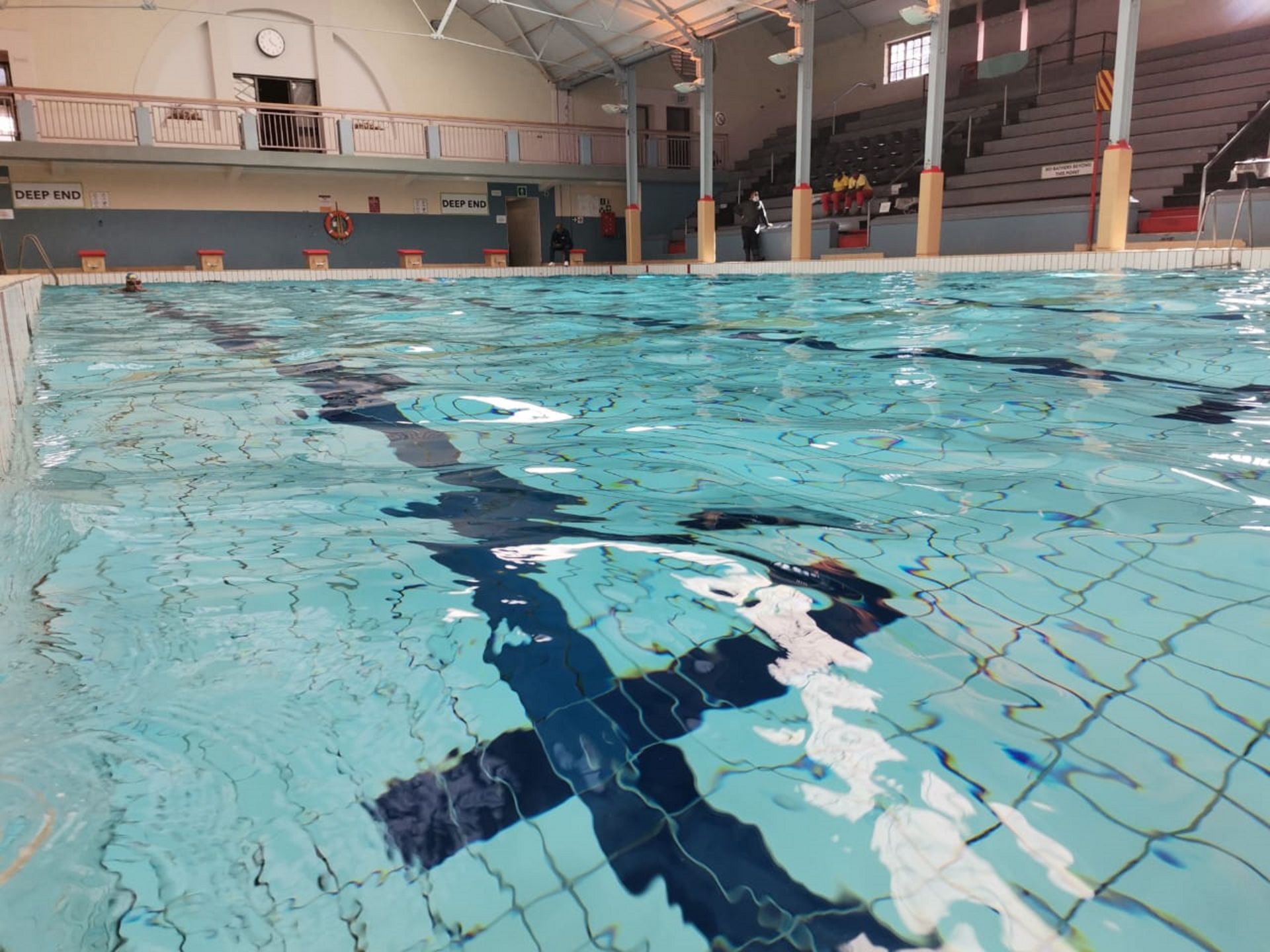
The movement of the pellucid water turns the lane lines into a doctor’s scribble on the bottom of the pool. There’s a milky murkiness to some public pools, but the water at Long Street seems to maintain an entrancing clarity.
“It has a quality no other pool in the city has. It’s so clear, you can see the bottom shelving away, and it feels gentle and infused with some sort of magic. I love the way the thin grouting of the tiles makes crazy shapes on the surface.”
SECRET OASIS
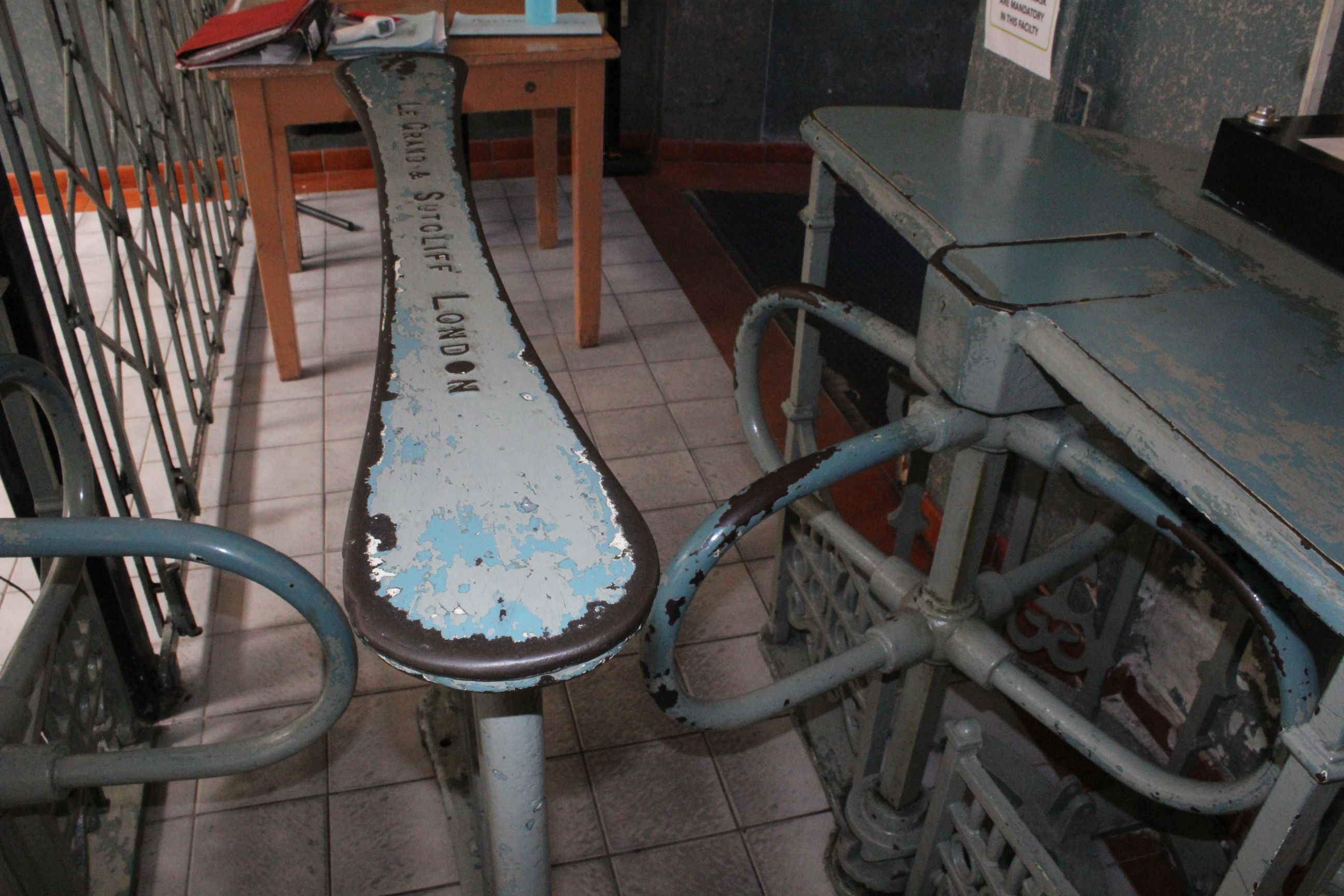
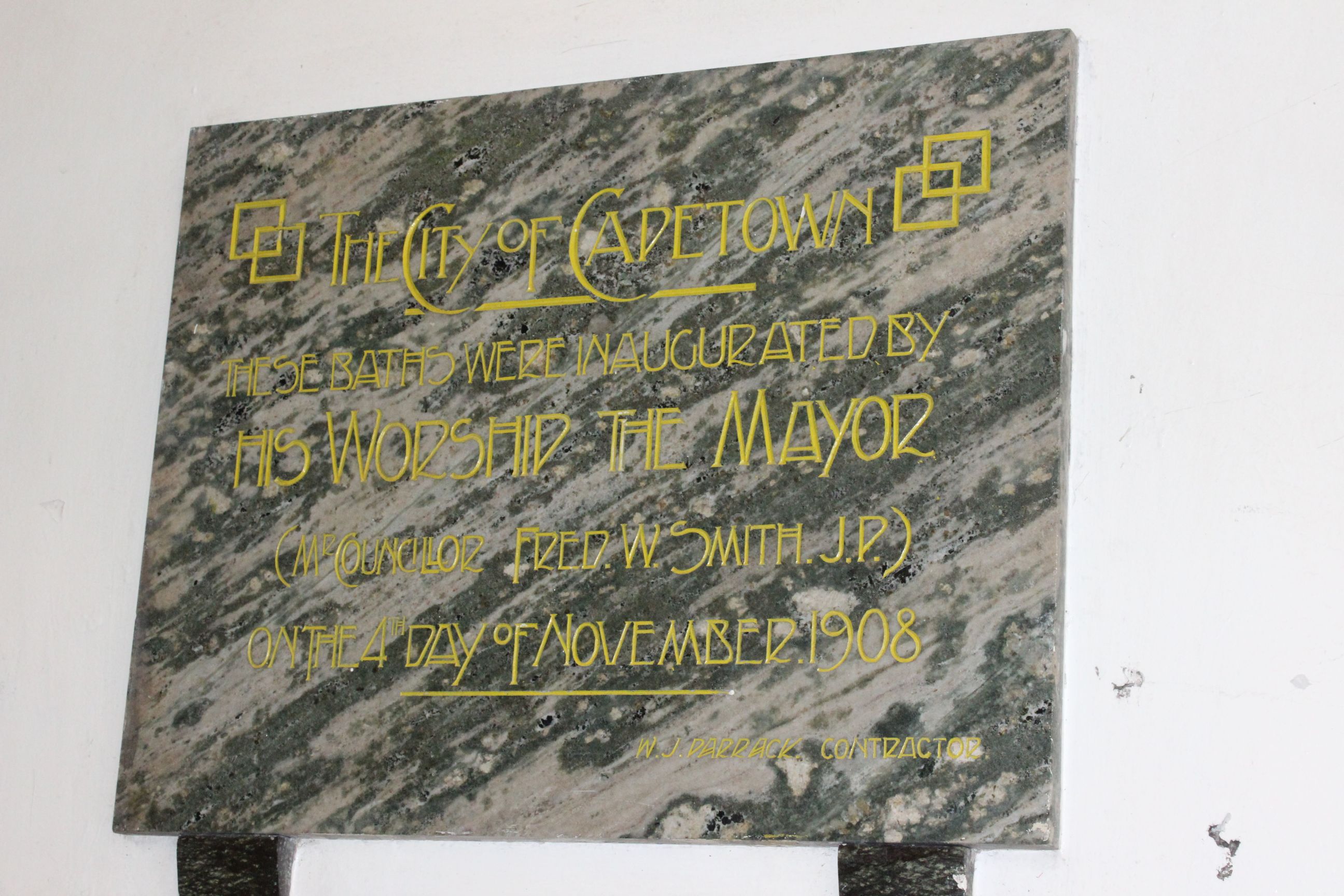
The Long Street Baths are a mix of Victorian, Edwardian and Art Nouveau architecture and the lettering on signage reflects a long history of changing needs, times, rules and ideas. The 25-metre pool was built in 1908, and around 20 years later, the Turkish baths were added on. Here people could come for a steam bath and a massage. This service has fallen away in recent years.
The hand-wringing that almost saw the baths being obliterated in the 70s came to a head when a resolution was made in 1985 to improve the facility. In 1990, the city council spent R2.2 million, adding a glass section on the east wall with an outside area for bathers to sit in the sun.
After the 1990 renovations, tickets cost R2 for adults and 80 cents for children. Adults now pay R32 for a swim and children R18. Monthly tickets are available too.
The pool has been used for many years by the Walmer Swimming Club and the Cape Town Underwater Hockey Club. Elize Viviers, coach of the SA Elite Women’s Team, says the club’s relationship with the pool and its people over the years has been warm and reciprocal.
“If you spend your life beside pools you end up leaving swimming costumes behind. The only pool I have ever swum in where my bathing costume would be in ‘lost and found’ if I left it behind was at the Long Street Baths.”
Yet, for all its popularity, and its longevity, the pool remains one of those secret city oases. In an interview in 2015, Sadick “Dickie” Holtman, who’d worked at the baths for 30 years before his retirement, said: “People walk past every day and never look inside. They’re amazed when they see this place for the first time. Many people don’t know it exists.”
But there it is, tucked away between a petrol station and one of Cape Town’s oldest backpacker lodges. It is surrounded by churches and mosques, bars and restaurants; a quiet old lady, dressed in grey, who has provided solace and exercise and friendship and fun for over a century.
RELATED STORIES:
IMAGES: CCID, City of Cape Town